









Communication is an essential part of the workplace, making it a valuable skill for professionals across industries and job roles. By researching how to improve your communication at work, you can enhance your workplace relationships and your contributions to your job role. In this article, we explore why good, effective communication at work is important, plus we provide 21 tips on how to improve your communication within the workplace.
Why good communication is important
Having good communication skills at work helps improve productivity and efficiency within a team. Using effective communication in the workplace also helps you maintain positive professional relationships with your co-workers and superiors by encouraging you to ask for clarity and use appropriate communication channels. Overall, good workplace communication contributes to a positive company culture and an ability to meet company goals.
21 workplace communication tips
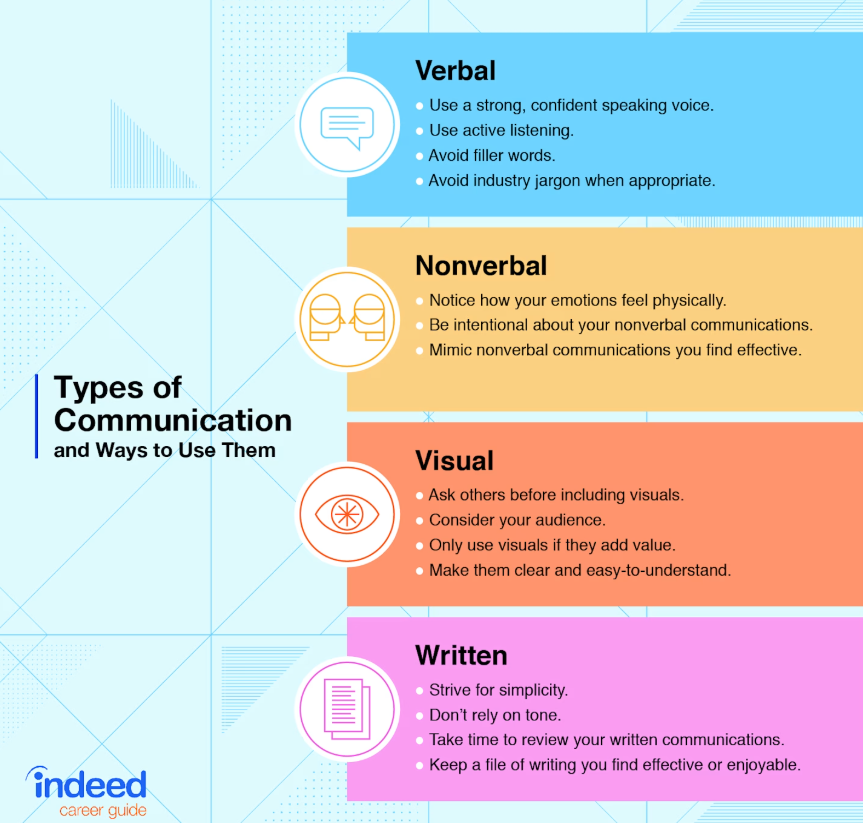
You can use the following tips to help make your verbal and written communication with co-workers more effective:
1. Give yourself enough time to practice presentations or draft important documents
Whether you have to give a presentation or write a report, you must give yourself ample time to plan how you want to present and discuss materials, which influences the clarity of your piece and the overall message. When preparing for presentations, think about your goals for the presentation and the information you need to include. Doing so can help you develop a presentation outline to reference as you practice. When writing a report, you should also think about its purpose and what information the readers want to know, which will help draft and refine your message.
2. Practice active listening
Active listening is using nonverbal cues and small verbal gestures to convey your attention to the speaker. This includes nodding, smiling, taking notes and interjecting small phrases or words when engaging in conversation. These include words and phrases like "yes, sure" or "I see." You can practice active listening skills when speaking directly with your co-workers and manager or when listening to presentations at meetings.
3. Use paraphrasing techniques
When communicating in the workplace, you can gain clarity by paraphrasing messages. For example, when a co-worker asks a question after your presentation, start by paraphrasing their question: "So you want to know why there were discrepancies between this month's numbers and last month's?" This is important because it allows your co-worker to confirm the question or provide further clarity so you can provide a better answer.
4. Know when to ask open-ended vs. close-ended questions
Open-ended questions are those that prompt someone to share their thoughts or opinions and these questions usually don't have direct answers. In contrast, close-ended questions cause someone to provide a specific answer, like yes or no. Knowing when to use open-ended vs. close-ended questions can influence whether you get the information you need to complete your job duties. For example, use an open-ended question when you want to hear a co-worker's feedback on a project and use close-ended feedback when you want to know the deadline for a project.
5. Observe nonverbal cues
To enhance your workplace communication techniques, start by observing what your coworkers communicate nonverbally. Nonverbal cues can convey how a person actually feels about a topic or subject. When observing these cues, pay attention to your co-workers' facial expressions, hand gestures and other signs that would indicate how they might feel—either positive or negative.
6. Maintain professional language
Although it's important to make connections with your co-workers, maintaining professional language in emails, presentations and verbal communications can help convey your professionalism and dedication to your job. To test whether a message uses professional language, consider if it would be appropriate to send it to a supervisor.
7. Establish personal connections
While you need to maintain a sense of professionalism at work, connecting with co-workers over hobbies or personal interests can help you foster positive workplace relationships. Learn more about your co-workers' interests and family life during lunch breaks or after-hours events to get to know them better.Once you establish more personal connections with co-workers, you can ask questions and engage in conversations that show you care and strengthen your workplace relationship. For example, if a co-worker mentions her daughter's graduation is on Thursday, ask about how it went when you see them on Friday.
8. Use tone of voice to add clarity
Your tone of voice affects how others interpret your verbal and written messages. When speaking with co-workers, be sure to use a happy and uplifting tone of voice to convey your interest in your conversations with them. Doing so helps co-workers feel valued and helps them gauge your thoughts on a topic. Similarly, you can convey your thoughts through email by selecting the right words and symbols. For example, instead of writing: "Thank you, I appreciate it," use "Thank you, I'm so grateful for your help!" The exclamation point helps convey your emotion and the language you use helps the recipient gauge how important their help was.
9. Engage in face-to-face communication often
Although emails, memos and phone dialogues allow you to communicate with co-workers and employees in other departments, face-to-face communications help you enhance your professional relationships, save time and increase message clarity. This is because it encourages you to interact with your co-workers and allows them to ask quick follow-up questions.
10. Be transparent about your needs
Another way to communicate effectively in the workplace is to practice transparency, which means stating your intentions or needs clearly. For example, instead of agreeing to take on additional work when you have a lot to do, be honest with your superior about your current workload and ask if you can work on additional tasks tomorrow. This practice helps you maximize your productivity and energy levels at work.
11. Communicate your needs promptly
Immediately addressing any questions you have is an important part of good communication. Being able to communicate promptly ensures you maximize your productivity and make beneficial contributions to your company. For example, reach out for support as soon as you realize you need help to complete a project or ask your superior to clarify a term immediately after you receive a task briefing.
12. Practice interpersonal communication
Interpersonal communication is the process by which individuals adjust their communication tactics to accommodate the needs of others. By adjusting your communication, you can maximize your workplace interactions and aid productivity. For example, you may contact your superior by email with a question because you know they prefer emails over unscheduled office visits. Similarly, you use common words and phrases to help someone from another department understand your department's complex procedures.
13. Develop your writing skills
It's important to understand how to write effectively so you can take part in written communication at work. Knowing how to write effectively ensures clear communication between you and your co-workers or superiors. Your writing skills can also influence your ability to obtain new roles or responsibilities in your workplace. To improve your writing skills, complete writing exercises online and ask others to review previous memos, emails, reports or newsletters you wrote.
14. Learn email basics
Consider completing research online or taking an email writing course to help enhance the quality of your email writing practices. Professional emails should be short and concise and only provide the most relevant information about a topic. This is important because your recipient might have a small time frame to check and respond to emails throughout the workday. By writing a concise email, you increase your chances of getting a quick reply.
15. Download proofreading tools
Error-free documents show your professionalism and ensure the accuracy of your messages. Adding a proofreading or grammar extension on your computer can help you find spelling errors and identify vague language to enhance the quality of your written communication tactics.
16. Use visual elements
You can use visuals to convey information more effectively when using verbal or written communication. For example, when giving a presentation, presentation tools like a slide show can help your audience absorb the information quickly. Similarly, charts or graphs in a written report also help your reader visualize the meaning of your text.
17. Use clear and concise language
It's important to use clear and concise language when taking part in verbal or written communications because it reduces questions or confusion about the topic. When speaking with co-workers include phrases like "Does that make sense?" or "Am I easy to follow?" to refine your message. Similarly, when writing emails, check over your drafts to identify areas that you could make more clear or direct. For example, rather than "We will hold the meeting at 3 this afternoon," you can say, "Today's meeting is at 3 p.m."
18. Demonstrate your gratitude
One way to encourage a positive team or company culture through communication is to show your gratitude to your co-workers. You can demonstrate your gratitude by thanking them for their help on a project or by acknowledging their personal traits you admire, like their optimism. By doing this, you enhance your professional relationships with your co-workers and communicate with them more effectively.
19. Take advantage of public-speaking opportunities
Developing your public-speaking abilities can help you overcome any fears or concerns you have about speaking in front of others. One aspect of public speaking is learning to deliver messages effectively through proper enunciation and pauses. These techniques ensure listeners hear and understand your message clearly. You can also learn tips for connecting with an audience, such as using relatable language. By volunteering to give presentations during meetings and other important work events, you can improve your verbal communication skills.
20. Ask for feedback
Asking for feedback from your manager and co-workers about your communication skills allows you to learn more about your strengths and what areas you need to improve on. When asking for feedback, you can ask questions about a direct event, like a team project or presentation, or ask questions about their communication needs about the way you communicate with them. Getting feedback on your communication skills in the workplace helps you become more mindful about the tactics you use.
21. Set daily goals
To enhance your communication skills, you need to set small goals and focus on achieving them throughout the workday. Examples of goals include asking questions to your supervisor or manager within 30 minutes of starting a new project or being clear and concise in email messages. By setting daily goals, you can improve your workplace communication and gain confidence in your communication abilities.


 Ren Ecosystem