







There is no single quietest animal in the world. Many animals make nearly no audible sound at all, and ranking them by quietness has no objective measure. Animals routinely cited as the world’s quietest include most snakes, which lack vocal cords and produce only soft hisses, plus sloths, which barely move and rarely vocalize. Most owls fly silently thanks to specialized feathers. Giraffes were long thought to be silent and only recently found to hum. Most fish produce sound only in specific situations, mostly inaudible to humans.
However, “quietest” can mean a few different things: lowest sound volume, fewest vocalizations, or quietest movement. By movement, owls are famous for being almost completely silent in flight, allowing them to surprise prey. By total vocalization, sloths may produce only a handful of sounds in a year, mostly cries from babies separated from mothers. By body design, snakes lack vocal cords entirely, producing only hisses through their tracheae. So depending on the measure, the quietest animal could be any of several silent or near-silent species, with owls famous for movement silence and sloths or snakes for vocal silence.
Owls: silent in flight
Owls are uniquely silent in motion. The features:
- Specialized feathers. Owl feathers have serrated leading edges and soft trailing edges that break up airflow and dampen sound.
- Velvety outer layer. The outer layer of owl feathers is covered in soft velvety down that further muffles air movement.
- Slow, gliding flight. Owls fly at relatively slow speeds, reducing the sound their wings make through the air.
- Hearing-dependent hunting. Owl silence is an adaptation for hunting prey by ear, since loud wings would mask incoming sounds and warn prey.
So owls are the famous example of silent movement in nature, with several unique feather adaptations producing near-silent flight.
Snakes: no vocal cords
Snakes are vocally silent in a near-absolute sense. The biology:
- No vocal cords. Snakes lack vocal cords entirely, so they cannot produce sounds the way mammals or birds do.
- Hiss through tracheae. The only sound most snakes can make is a hiss produced by forcing air through their tracheae.
- Rattlesnakes are an exception. Rattlesnake rattles produce sound from keratin segments at the tail tip, not from vocalization.
- Mostly silent in nature. Outside of defensive hissing or specific behaviors, snakes are almost completely silent.
So snakes are among the quietest animals because their bodies lack the equipment for vocalization, producing only occasional soft hisses.
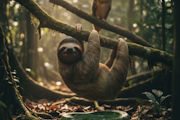
Sloths: barely move, rarely vocalize
Sloths are quiet because they barely interact with their environment audibly. The behaviors:
- Extremely slow movement. Sloths move so slowly that their motion produces almost no sound.
- Rare vocalizations. Adult sloths rarely vocalize at all, with the main exception being infant cries when separated from mothers.
- Algae camouflage adds quiet. Algae growing in sloth fur further muffles any sound their movement might produce.
- Long sleep. Sloths sleep 15+ hours per day, during which they make nearly no sound.
So sloths are quiet through their general lifestyle of slow movement, rare vocalization, and long periods of inactivity.
Giraffes: thought to be silent for years
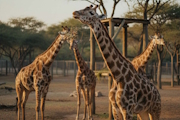
Giraffes were long assumed to be silent but are now known to hum. The story:
- Apparently silent for centuries. Giraffes were assumed to be silent by most observers, with no audible vocalizations heard in zoos or the wild during daylight.
- 2015 humming discovery. A 2015 study using overnight recordings in three European zoos found giraffes hum at infrasound levels at night.
- Below human hearing threshold. The hums are at around 92 Hz, near the lower edge of human hearing.
- Function unclear. Researchers are still studying why giraffes hum at night and what the function may be.
So giraffes are not technically silent but were considered so for centuries because their vocalizations are below most human auditory perception.
Other quiet animals
Several other animals are routinely cited as among the quietest. The list:
- Most fish. Most fish produce no sound or only specific situational sounds, mostly inaudible to humans without hydrophones.
- Most amphibians outside breeding season. Frogs and salamanders are silent except during specific breeding periods.
- Most insects. Most insects are nearly silent except for specific groups like cicadas, crickets, or beetles.
- Most mammals while sleeping. Many mammals are silent during sleep, with the exception of snoring or vocalization in dreams.
So “quietest animal” depends heavily on context, with many animals being silent most of the time but vocalizing in specific situations.
How “quiet” gets measured
There are several distinct ways to measure animal quietness. The metrics:
- Movement sound. How loud the animal’s movement through its environment is, where owls win.
- Vocalization frequency. How often the animal vocalizes, where sloths and snakes win.
- Vocalization volume. How loud the animal’s vocalizations are when produced, where many species are very soft.
- Audibility to humans. Whether the animal’s sounds fall within human hearing range, where many species like whales, elephants, and giraffes make sounds below or above it.
So “quietest” depends on whether you mean movement silence, vocal silence, low volume, or just silence to human ears.
Takeaway
There is no single quietest animal in the world, because many animals are nearly silent and no objective ranking exists. The animals most often cited as the world’s quietest include owls, which are silent in flight due to specialized feathers with serrated leading edges and soft outer layers. Snakes lack vocal cords entirely and produce only soft hisses through their tracheae. Sloths barely move, rarely vocalize, and sleep 15+ hours daily. Giraffes were long assumed silent but were found in 2015 to hum at around 92 Hz at night, near the lower edge of human hearing. Most fish, most amphibians outside breeding season, and most insects are also routinely silent. “Quietest” depends on whether you mean silent in movement where owls win, silent in vocalization where sloths or snakes win, or silent to human hearing where giraffes, whales, and elephants often use infrasound. The honest answer is that nature includes many nearly silent species, with the “quietest” title shifting by criterion.


 Ren Ecosystem