








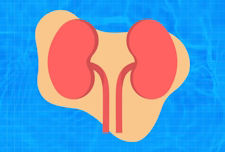
(Credit:Getty Images. EatingWell Design)
If you’ve been eating for heart or gut health, it’s time to consider how you can support your kidneys—the little bean-shaped organs working 24/7 to keep your body in balance.
“Your kidneys get rid of waste, stop good stuff from leaving your body, keep the body’s pH in range, activate vitamin D into a usable form and help the body make red blood cells,” says Melanie Betz, M.S., RD, CSR, FNKF, FAND.
When your kidney health declines, so does the rest of your health. “More than 37 million Americans are estimated to have chronic kidney disease (CKD),” says Jen Hernandez, RDN, CSR, LDN. “As many as 9 in 10 adults with CKD are not aware they have the disease, because early-stage kidney disease typically has no symptoms.”
While there are many ways to support your kidneys, experts agree that staying hydrated is one of the most important. We spoke with three kidney experts to share what happens to your kidneys when you’re dehydrated, along with simple hydration tips to help.
Blood Flow to the Kidneys Is Reduced
Your kidneys filter 200 liters of blood each day, depending heavily on water to keep the blood flowing steadily. As hydration levels drop, your blood becomes more concentrated with waste, and less blood is filtered through the kidneys. “Your kidneys respond by trying to conserve as much water as possible, which means they’re concentrating urine and working harder to maintain balance,” says Hernandez.
If your kidneys can’t filter waste effectively, acute kidney injury (AKI) may occur and can sometimes lead to lasting damage. While anyone can experience kidney damage from dehydration, “the risk of dehydration-induced AKI is higher in people who take nonsteroidal anti-inflammatory drugs (NSAIDs) on a regular basis,” says Tim Pflederer, M.D., FASN, FASDIN
Kidney Stones Could Form
If you’ve ever had to pass a kidney stone, you’ll likely do anything to avoid repeating the experience. Similar to actual stones, minerals and salts in the urine can fuse together, forming hard compounds that range from the size of a grain of sand to—in rare cases—a golf ball. “When urine becomes highly concentrated, minerals like calcium and oxalate are more likely to crystallize and form stones,” says Hernandez.
If you have a personal or family history of kidney stones, Pflederer recommends drinking plenty of water each day to help prevent their formation. Drinking at least 2.5 liters (about 85 fluid ounces) of water daily can help prevent stone formation by keeping your urine and stone-forming minerals diluted.
Increased Risk of a UTI
Women of all ages, as well as older adults, have an increased risk of developing a urinary tract infection (UTI). UTIs occur when bacteria adhere to and multiply along the urinary tract lining, leading to infection and potential kidney complications if left untreated.
While dehydration doesn’t directly cause a UTI, it can increase the likelihood that one will occur. “When urine output drops due to dehydration, bacteria have more time to adhere to the urinary tract lining and multiply, increasing the risk of infection that can compromise kidney tissue,” says Pflederer.
Most UTIs can easily be treated with antibiotics, but frequent infections may increase the risk of future kidney complications. “What many people don’t realize is that chronic, recurring UTIs can cause ongoing inflammation and scarring in the kidneys over time, which can contribute to the development or progression of chronic kidney disease,” says Hernandez.
Tips to Stay Hydrated
Drinking water sounds simple enough, but for many people, it’s not easy. To help you stay hydrated for your kidneys and overall health, try some of these strategies:
- Eat Your Fluids. While beverages account for most of your fluid intake, about 20% comes from food. Fresh fruits and vegetables like watermelon, lettuce, cucumbers and strawberries can contain up to 90% water.
- Use Flavor. If you struggle to drink plain water, try infusing it with fresh fruit, vegetables and herbs, or by using water-flavoring packets or drops.
- Adjust Your Intake Based on the Weather and Activity. The amount of water you need on a cool, inactive day is very different from what you need on a hot, active day. If you’re losing fluids through sweat or illness, be sure to replenish accordingly.
- Keep Water on Hand. The simplest way to increase your fluid intake is to always have a water bottle nearby. Make carrying a reusable water bottle a habit so you can stay ahead of thirst.
Our Expert Take
Your kidneys work around the clock to keep your body in balance. Staying hydrated supports blood flow and helps prevent kidney stones and UTIs, making it one of the simplest ways to protect your kidneys.
Experts recommend prioritizing water and eating water-rich foods like fruits and vegetables, along with carrying a reusable water bottle and adjusting your intake based on activity and weather. By making hydration a daily habit, you can help keep your kidneys functioning at their best.


 Ren Ecosystem