








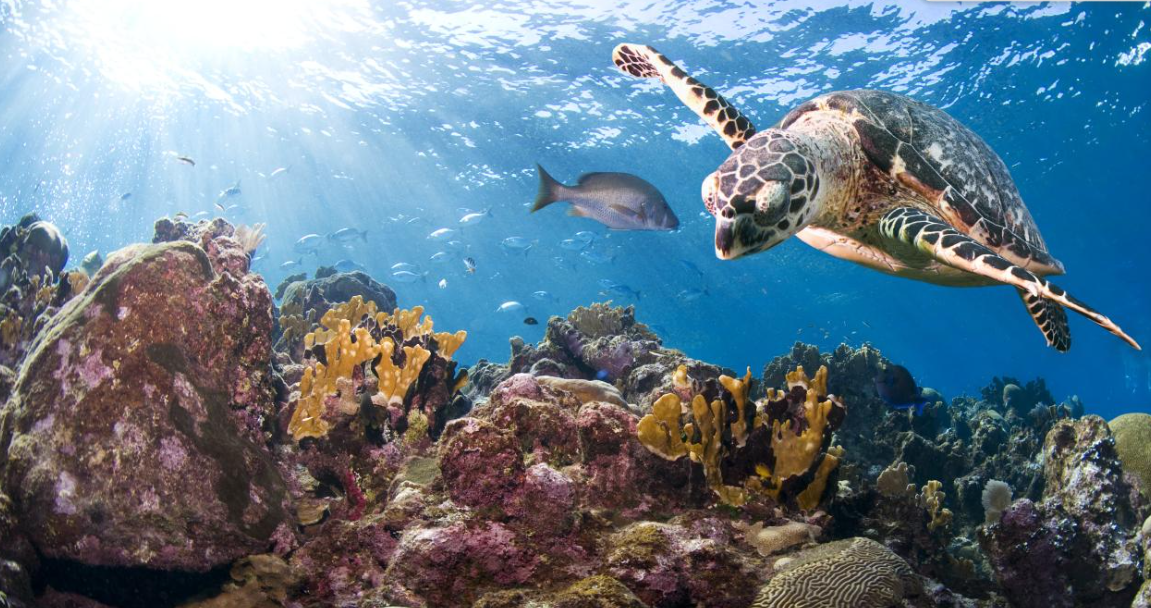
Marine Turtle (Chelonioidea)
Hawksbill (Eretmochelys imbricata)
Loggerhead (Caretta caretta)
Leatherback (Dermochelys coriacea)
Olive ridley (Lepidochelys olivacea)
Kemp's ridley(Lepidochelys kempii)
Green (Chelonia mydas)
Flatback (Natator depressus)
There are seven species of marine turtles listed above. Marine turtles have been in our oceans for over 100 million years. They’re brilliant navigators, swimming hundreds or thousands of kilometres between feeding and nesting grounds. But they face lots of threats along the way – so we’re doing all we can to help them.
Marine turtle population estimates (including those stated above) are based on the number of egg-laying females – we can’t be sure of the numbers of elusive sea-dwelling males, or females that aren’t breeding. But we do know at least five of the seven species are at risk of extinction.
Why are they so important?
Some turtle species are actually important predators that play a key role in keeping ocean food chains healthy.
For example, hawksbill turtles eat lots of sea sponges, which could otherwise out-compete reef-building corals if left unchecked. Green turtles consume algae, helping prevent overgrowth on coral reefs, which is crucial for the health of the reef ecosystem. So, the turtles help maintain the balance of reef ecosystems and promote coral health, which are crucial for the survival of many other creatures.
The leatherback turtle is also a big eater of jellyfish, which helps regulate populations, indirectly supporting fish stocks – which benefits other animals in the food chain, as well as people.
Top 10 facts about marine turtles
1. There are seven species of marine turtle
Marine turtles were around more than 100 million years ago - and lived alongside dinosaurs. These days, scientists recognise seven species of marine turtle:
- Hawksbill
- Loggerhead
- Leatherback
- Olive ridley
- Green
- Flatback
- Kemp's ridley
Six of these are threatened with extinction, and there's simply not enough information on the flatback to know how at risk they are.
2. Turtles don’t have teeth
They use their beak-like mouth to grasp their food. This beak is made of keratin (the same stuff your fingernails are made of).
3. They’re well ‘ard
Turtle shells are made of over 50 bones fused together - so they're literally wearing their bones on the outside.
They also have light, spongy bones that help them float.
4. Their young lives are a mystery
The first few years of a marine turtle’s life are known as the ‘lost years’. That’s because the time between when the hatchlings emerge until they return to coastal shallow waters to forage is incredibly difficult to study. The lost years they spend at sea – which can be up to 20 years – largely remain a mystery to us.
5. They can be ginormous
Marine turtle species vary greatly in size. The smallest, Kemp’s ridley, measure around 70cm long and weigh up to 40kg, whilst the leatherback can reach up to 180cm long and weigh 500kg. That’s over 10 times heavier!
Amazingly, Wales holds the world record for the largest marine turtle ever found. In 1988, a leatherback was found ashore measuring 2.5 m long, 2.5 m from flipper to flipper, and weighing over 900kg (that’s more than 140 stone)!
6. It’s survival of the fittest
It's estimated that only around 1 in 1,000 marine turtle hatchlings make it to adulthood. This is down to the long time it takes for them to reach maturity and the many dangers faced by hatchlings and juveniles – from predators to marine plastics.
7. They make some interesting noises
Female leatherbacks make some strange noises when they’re nesting – some of which sound similar to a human belch.
8. Sad but less salty
Turtles may sometimes look as if they're crying - but they're actually getting rid of excess salt (from swallowing salty seawater) through a 'salt excretion gland' near the corner of their eye. The salt excreted from this gland can have a salt concentration twice that of seawater.
9. Life ain’t a track meet, it’s a marathon
Marine turtles can migrate incredibly long distances – the longest known record is for a female leatherback who swam nearly 13,000 miles over 647 days from Indonesia to the west coast of America. That’s over 20 miles a day.
10. They always return home
Females return to the same beach they hatched on, to lay their own eggs and bury them in sand ‘nests’. Marine turtles’ amazing ability to navigate comes from their sensitivity to the Earth's magnetic fields.


 Ren Ecosystem