







Across Southeast Asia,laser-based broadband is reshaping home internet and high-speed connectivity.
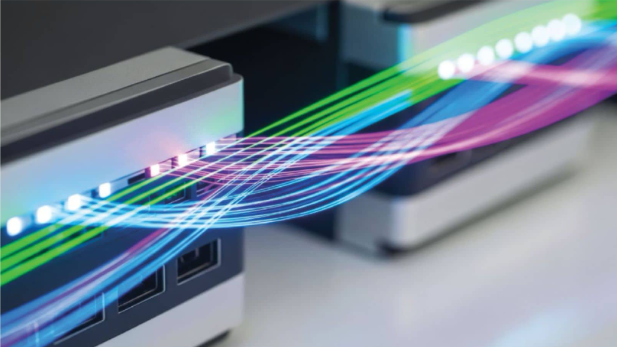
In Southeast Asia, the meaning of 'home internet' is evolving. For many years, a high-speed residential connection meant months of road excavation and intricate copper-to-fibre wiring.Today, it increas-ingly means receiving data through invisible beams of light. Southeast Asia is one of the most active testing grounds for this shift.
Singapore is leading the way. Compa-nies like Transcelestial are moving beyond conventional underground infrastructure to deploy free-space optical (FSO) technolo-gy at the residential level. Property develop-ers are incorporating precision optics into core community designs; technicians are being trained to install point-to-point laser links for home broadband, and providers are rolling out small, shoebox-sized devices like CENTAURI across residential estates and high-rise condominiums. Optical con-
nectivity is now a household requirement.
The Philippines is moving with simi-lar ambition. Consumer connectivity projects aim to equip remote households, from coastal villages in Luzon to the Visayas, with practical high-speed connectivity.
The country's Globe Telecom now offers fibre-class consumer capacity across dif-ficult terrains, using wireless laser links to stream data directly to neighbourhood distribution nodes, while local engineer-ing teams redesign home networks around line-of-sight laser terminals and automat-ed alignment systems.
Indonesia is tackling laser-to-the-home connectivity at the population level. Across the archipelago, network providers-in-cluding Transcelestial are using adaptive laser alignment systems to bring high-ca-pacity residential connectivity to millions of families and remote workers. These sys-tems do more than deliver streaming data; they mechanically adjust mirrors, identify atmospheric interference, and reroute data streams to maintain stable connections even in the most demanding weather conditions.
Consumer infrastructure is also rapidly evolving in other parts of Asia as the region is seeing the development of "laser-aug-mented specialists' trained to deploy 'light bridges' to restore household connectivity over disrupted terrain in hours. This is par-ticularly useful during crises and natural disasters. Meanwhile in India, operators in-cluding telecom giants Bharti Airtel, are in-tegrating over-the-air laser platforms like Alphabet's Taara to beam gigabit speeds di-rectly to residential rooftops, significantly accelerating last-mile rollout timelines.
Across the region, the modern connect-ed home is defined less by what's buried in physical lines but by adaptability, digital confidence and the ability to work alongside intelligent optical tools. Wireless lasers ar-en't replacing human capability; they're am-plifying it. Southeast Asia in particular, with its unique island geography and digital-first mindset, is emerging as a proving ground for the next era of home connectivity.


 Ren Ecosystem