








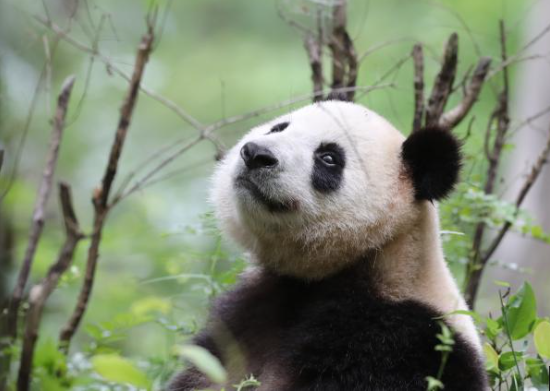
(photo by wwf.org)
Giant Panda
(Ailuropoda melanoleuca)
The charismatic giant panda is a global conservation icon and the symbol of our organisation. Thanks to decades of successful conservation work, wild panda numbers are starting to recover, but they remain at risk. Their habitat is severely fragmented which is the biggest threat to their survival.
Pandas typically lead a solitary life. They're excellent tree climbers, but they spend most of their time feeding. They can eat for about 14 hours a day, mainly bamboo, which is 99% of their diet (though they sometimes eat eggs or small animals too). Giant pandas measure up to 150cm long and weigh between 67kg and 160kg - males weigh 10-20% more than females, about twice as heavy as a person.
Giant pandas are living proof that conservation works.
Why are they so important?
Giant pandas help to keep their mountain forests healthy by spreading seeds in their droppings, which helps vegetation to thrive.
The giant panda’s forested habitat is also important for local people – for food, income and fuel for cooking and heating; they also play a crucial role in regulating water flow. Pandas live in the mountain catchment areas of the Yangtze and Yellow rivers. The forests act as natural drainage basins, helping to control water runoff, reduce soil erosion and maintain water quality, which over a half a billion people depend on.
Panda habitat rivals the highest biodiversity of any ecosystem in the world. It's also vitally important for other threatened and endangered species, including golden snub-nosed monkeys, takins, red pandas and snow leopards.
By protecting pandas we’re also helping protect the wider environment where they live, for all the wildlife and the people that depend on it.
Top 10 facts about Pandas
1. Pandas have excellent camouflage for their habitat
The giant panda's distinct black-and-white markings have two functions: camouflage and communication. Most of the panda - its face, neck, belly, rump - is white to help it hide in snowy habitats. The arms and legs are black, helping it to hide in shade.
2. Their eyes are different to normal bears
Like domestic cats, giant panda bears have vertical slits for pupils.
3. Cubs are well protected in their first month
Mother pandas keep contact with their cub nearly 100% of the time during their first month - with the cub resting on her front and remaining covered by her paw, arm or head.
4. Pandas can swim and even climb trees
Giant pandas are good swimmers and excellent tree climbers. At 5 months old, giant panda cubs learn how to climb - sometimes practising by climbing on their mum.
5. A helping hand
They have an extended wrist bone that they use like a thumb to help them grip food.
6. They spend a lot of their day eating
Giant pandas spend 10-16 hours a day feeding, mainly on bamboo.
7. Bamboo is critical to their diet
Pandas need at least 2 different bamboo species in their range to avoid starvation
8. But they do occasionally eat something other than bamboo
A panda’s diet is 99% vegetarian, which mostly includes bamboo roots, stems, shoots and leaves. However their digestive system is typical of a carnivore, so the remaining 1% of their diet can include eggs, small animals and carrion. Pandas are also known to forage in farmland for pumpkin, kidney beans, wheat and domestic pig food.
9. Pandas sometimes do handstands when they wee!
Sometimes, to mark their scent, panda's climb a tree backwards with their hindfeet until they're in a full handstand upside down - enabling them to leave their scent higher up.
10. They like to keep it regular
On average, pandas poo 40 times a day.


 Ren Ecosystem