








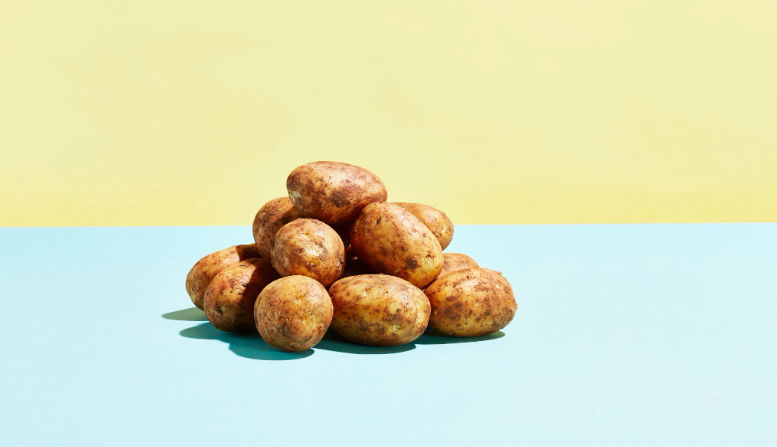
Photo: Getty Images
Pity the poor potato. Even though it’s the most commonly consumed vegetable in the United States, it’s gotten a bad rap. Which makes sense in some ways — deep-fried french fries and potato chips account for a lot of that consumption. Headlines link them to obesity and type 2 diabetes. But dig a little deeper, and a different picture emerges.
The problem with potatoes doesn’t come from the potato itself. It’s the way we eat them.
“Eating mashed potatoes with a lot of cream and butter increases your saturated fat and calories, and salt adds sodium. Fried potatoes often go with fast food,” says Frank Hu, M.D., chair of the nutrition department at the Harvard T.H. Chan School of Public Health.
And just as a baseline, he points out, spuds are full of starch.
“That doesn’t mean potatoes should be completely excluded from your diet,” Hu says. “A moderate amount can still be included as part of a healthy dietary pattern. They do have a significant amount of fiber, potassium and some vitamins.”
Embracing the potato
In Nordic countries — Sweden, Norway, Denmark, Finland and Iceland — potatoes are a staple food, along with fish, berries, whole grains, root vegetables and rapeseed oil. Studies have linked this diet to lower blood pressure, cholesterol and inflammation.
For the region’s most recent dietary guidelines, experts sorted through the existing research. They found that if you don’t deep-fry your spuds, there’s not much evidence to link them to chronic diseases, cancer or death in general. Scandinavians cook potatoes many ways, but the most common way they eat them is boiled, with fresh dill if it’s available.
“We say to eat more vegetables, but potatoes don’t count — that’s not right. Potatoes do count, and they bring together nutrients,” says Joanne Slavin, a nutrition professor at the University of Minnesota. “So whether you’re making them into breakfast hash browns or having them in soup or stew, they round out meals. They’re not the star player, but they’re an important part of making meals enjoyable.”
Plus, research shows they offer some very real health benefits for people over 50. Here are four of them:
1. Lower blood pressure
Potassium is one of those nutrients you probably don’t think about too much — but every day, most Americans fall short of the recommended intake. That factoid may make you want to reach for a banana, and sure, it’s a great source. Before you do, consider this: A medium baked potato with skin has more than twice as much potassium as a medium banana. Potatoes are potassium superstars.
That matters because potassium helps your body flush out sodium through your pee. Sodium is known to increase blood pressure — and unlike with potassium, most of us eat more salt than we need each day. If your body’s ratio of potassium to sodium is out of whack, it can mean trouble for your blood pressure. And high blood pressure can increase your risk for heart disease and stroke.
“Since so many older people have blood pressure problems, taking potatoes out of the diet, taking out that potassium, can be hugely problematic,” Slavin says.
In fact, the DASH diet, which is aimed specifically at lowering blood pressure, features potatoes for their potassium content. Just make sure to skip the butter, sour cream and salt. Season your spuds with heart-healthy herbs, garlic, olive oil and lemon instead.
2. Weight control
Surprise! You may have given up taters in hopes of losing those pounds that mysteriously pile on as you age. But potatoes — especially when they’re chilled after cooking — might be a secret weapon for weight loss.
Raw potatoes contain a type of fiber known as resistant starch, which your body can only digest slowly. Research has shown this type of starch can help with weight loss. It keeps you feeling full longer, so you eat less. But when you cook spuds, most of that resistant starch transforms into a gelatin-like substance that gets digested in a flash. This may be why you think you shouldn’t eat potatoes.
Cool them down, though, and a small miracle happens: Some of the gooey stuff reforms into resistant starch, the kind that’s good for you.
“It’s certainly better than eating hot potatoes, which are typically digested very quickly,” Hu says.
One study found that baking rather than boiling potatoes before they hit the fridge led to larger gains in resistant starch, but both cooking methods provided a boost.
“I like to boil up some potatoes, keep them in the fridge, and then use them in recipes,” Slavin says. “They're very flexible that way, and that will increase your resistance starch.”
Try Slavin’s tip to make a Niçoise salad with canned tuna, or an easy frittata. Note that if you reheat cooked and cooled potatoes, you sacrifice some of those gains in resistant starch, but they usually have more than freshly cooked spuds.
3. Improved gut health
You’ve heard of probiotics, the trillions of good-for-you bacteria that live in your gut. They provide all kinds of benefits inside your body, supporting things like heart health, immune function and your overall metabolic health.
In order to grow and flourish, though, probiotics need food, known as prebiotics. And potatoes’ resistant starch turns out to be excellent bacteria food.
“Resistant starch is basically a kind of prebiotics,” Hu says. “It’s beneficial for improving the gut microbiome composition.”
Here’s how it works: You’ve just enjoyed a side of delicious Red, White & Blue Potato Salad, which uses cold white and blue potatoes (more on blue potatoes below). Because you’ve chilled the potatoes, you’ve eaten resistant starch. Your small intestine can’t digest that type of starch, so it passes through to your colon. There, it ferments and feeds the “good” bacteria your body needs to stay healthy.
4. Overall health
Spuds don’t just offer potassium and fiber. They’ve got plenty of other nutrients that confer benefits for people over 50. For instance, a medium baked potato with skin can give you:
- Vitamin C. You’ll get about 20 percent of your recommended dietary allowance (RDA) from one tater. You already know that vitamin C helps support your immune system and prevent the common cold, but a diet rich in this antioxidant also is linked lower risk of cancer, cataracts and heart disease.
- Vitamin B6. Expect to acquire nearly one-third of your RDA for this key nutrient when you eat a medium baked potato with skin. B6 has been shown to help with conditions like anemia, heart disease and depression.
- Polyphenols. Potatoes are abundant in the same antioxidant found in coffee, called CGA. It’s thought to help with blood sugar control, heart health and inflammation.
- Magnesium. Almost half of Americans don’t get as much magnesium as their bodies need, with men over 71 among the worst offenders. This nutrient can help prevent heart disease and stroke, type 2 diabetes and osteoporosis. Tuck into a baked potato and you’ll get more than 10 percent of the recommended amount.


 Ren Ecosystem