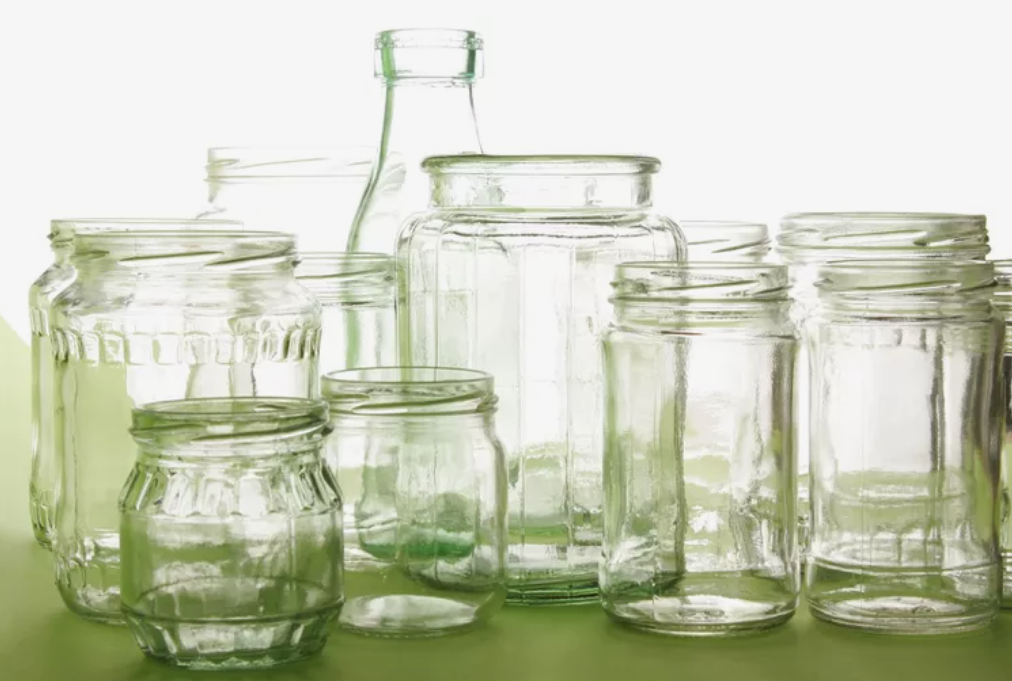
- Rinse out your glass bottles, jars, and containers so they are free of most food and label residue.
- Remove plastic or metal lids from glass jars and bottles.
- Do not intentionally break your glass.
- Dispose of broken glass with your regular garbage.
What Types of Glass Can Be Recycled
The food and beverage industry accounts for a large portion of the glass that winds up in glass recycling plants (about 18%).2
Clear glass used in containers, bottles, and jars can be recycled. This glass is usually made up of soda lime, the most common form of glass used.
According to Stanford University, glass makes up 5% of garbage in the U.S. and the return on glass recycling is significant in terms of decreasing the usage of new resources; one ton of recycled glass can save 1,330 pounds of sand, 433 pounds of soda, 433 pounds of limestone, and 151 pounds of feldspar during the creation of new glass.3
Other types of glass include borosilicate, which has at least 5% of boric oxide and has high-temperature resistance, aluminosilicate, which includes aluminum oxide and great chemical durability, 96% silica glass, a borosilicate glass which is processed to remove the majority of non-silicate ingredients, and fused silica glass, which has pure silicon dioxide and is the most expensive glass.
Glass that Cannot Be Recycled
While glass recycling is very energy efficient, glass needs to be sorted through a color composition process to remove contaminants. Different types and colors of glass have different melting points which is why not all "glass" materials can be recycled through the mainstream, curbside pick-up glass recycling processing.
Glass products such as windows, oven-safe dishes, Pyrex, and mirrors are manufactured differently than cullet-made glass bottles and jars, which is why they cannot be put out for recycling with your standard clear bottles and jars. Items with frosted glass, plate, glass, Pyrex, mirrors, and ceramics are considered contaminants and cause an entire load of glass recycling to be rejected.3
Lightbulbs cannot be recycled through your curbside service. In fact, some of them are even considered hazardous waste. Local recycling programs and consumer stores that sell products like lightbulbs, windows, etc. might offer recycling collections. For example, Lowe's has collection bins in its stores for incandescent lightbulbs, batteries, and plastic bags.
Pyrex, which has been specially treated to withstand higher temperatures, makes it incompatible with cullet, and cannot be recycled. According to Pyrex's website, there is currently no recycling process for broken or chipped Pyrex, and they advise customers to dispose of it with normal garbage. However, Treehugger encourages you to reuse your chipped Pyrex for a new purpose (see below).
Windows, including stained glass, laminated, or tempered, have a different chemical composition from standard glass bottles and jars. If your windows are still in good shape, try to donate them to non-profits such as Habitat for Humanity. Special recycling plants can also repurpose window glass in asphalt or fiberglass.
Eyeglasses can usually be recycled by the company that manufactured them. The Lions Club service organization is well known for collecting old eyeglasses and salvaging them for communities and individuals who cannot afford or do not have access to eye care. They collect prescription glasses as well as sunglasses.
Ceramic dishes and other products cannot be recycled at most recycled plants; however, certain companies that handle brick and concrete recycling may accept ceramic items.
Thanks to recent technology, windshield glass (made with laminated glass) can be recycled but not directly to mainstream processing plants. Many auto glassmakers have agreements with special laminated recyclers to process auto glass.
Any of the cullet-acceptable glass that does not meet manufacturing standards does not go to waste. It gets reused in tile, filtration, sandblasting, concrete, and landscaping.
However, any broken glass will be sorted with normal garbage and moved on to the landfill since it is hazardous for workers.
Ways to Reuse Glass
Items like empty glass bottles, jars, and containers are durable materials to use for DIY projects, arts and crafts, storage, gardening, decorations, and much more. Some ideas include:
Gardening
Water sources. Glass bottles filled with water, flipped upside down, and inserted in the soil can slowly release water.
Decorate your garden. Line beds with bottles or create a mosaic with broken glass to incorporate into a garden path or hang in a greenhouse.
Seedling starter. Lidless jars can be used to start seedlings for a vegetable or flower garden. Why go out and buy seedling containers when you can repurpose items you already have.
Food Storage
Empty jam, sauce, peanut butter, honey, etc. jars can make perfect reusable containers for food storage. Reusing these items can also help you cut down on single-use plastics for food storage.
Empty jars can also be used to store everyday items like paperclips, push pins, nails, craft supplies, etc.
Decoration
Glass items like wine, beer, and milk bottles can make beautiful centerpieces, vases, or light fixtures. Use paint and twine to customize your decoration further.
Art Projects
Glass can elevate a DIY art project to the next level. With a little creativity, a simple glass bottle or jar can become your newest holiday decoration, candle, centerpiece, maracas, or even toys.








 Ren Ecosystem