








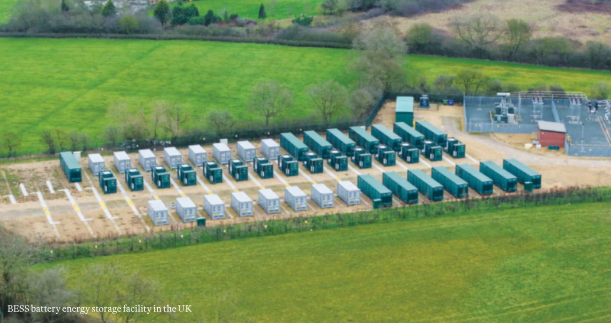
Photo:BESS battery energy storage facility in the UK
Green lithium technology is reshaping the sustainable tech landscape – one battery at a time.
Sustainable technology is evolving. For years, a high-speed digital lifestyle or an electric vehicle came with a hidden environmental cost: heavy-footprint mining. Now, it increasingly refers to powering everyday consumer tech with ethically sourced materials, quickly adjusting to global climate targets and drawing power from certified low-carbon supply chains.
One of the best examples of this shift is green lithium production. Instead of relying on traditional, water-intensive evaporation ponds, engineers are turning to Direct Lithium Extraction (DLE). This process uses targeted adsorption resins or membranes to selectively pull lithium ions out of underground brine within hours, after which the water is safely reinjected into aquifers to protect local water tables. On the recycling end, rather than emissions-heavy smelting, advanced hydrometallurgical refining shreds old batteries into an intermediate substrate known as ‘black mass’. Treated with targeted liquid solutions, this mass yields battery-grade lithium with minimal carbon output, creating a perfect ‘drop-in’ compound ready for gigafactories worldwide. Japan also recently announced a method to recover up to 90 percent of lithium from older batteries while cutting carbon emissions by around 40 percent compared to conventional recycling techniques.
The automotive industry is moving with similar ambition. Consumer mobility initiatives aim to provide everyday drivers access to practical, low-carbon transport. Automakers like BMW and Volvo are already transitioning to batteries that use lithium extracted via the DLE process. Their engineering teams also deploy enterprise blockchain technology for end-to-end provenance mapping and absolute supply chain visibility.
While consumer handhelds have yet to adopt green lithium, Netherlands-based Fairphone is taking a different approach to sustainable power. The brand utilises recycled materials – from plastics to aluminium – and sources 100 percent of its battery lithium from a single mine: Chile’s Salar de Atacama. Notably, this site has voluntarily undergone independent, third-party assessments against the IRMA Standard for Responsible Mining.
The energy sector, meanwhile, is scaling green energy storage at the population level using Lithium Iron Phosphate (LFP) cell chemistry for grid-scale Battery Energy Storage Systems (BESS). Projects like Chile’s Oasis de Atacama, Australia’s Collie Battery and Papago Storage in the US are all deploying LFP chemistry for utility networks. These systems don’t just deliver backup power; they support lifecycle sustainability auditing, identify second-life opportunities for retired EV batteries and help ensure clean renewable energy storage with minimal carbon output.
Ultimately, the modern smart lifestyle is not defined by a heavy carbon footprint but by adaptability, digital confidence and the ability to work alongside intelligent green tools.


 Ren Ecosystem