







Credit: Damir Kolobaric / Image generated using AI
Even the strongest authentication system can fail due to a few common weaknesses — often caused by human habits or outdated security practices.
This article discusses common authentication mistakes that threaten account security, such as weak passwords, password reuse, phishing, and outdated methods. Luckily, resolving these problems is simple and doesn't demand specialized technical knowledge.
1. Weak Passwords and Password Reuse
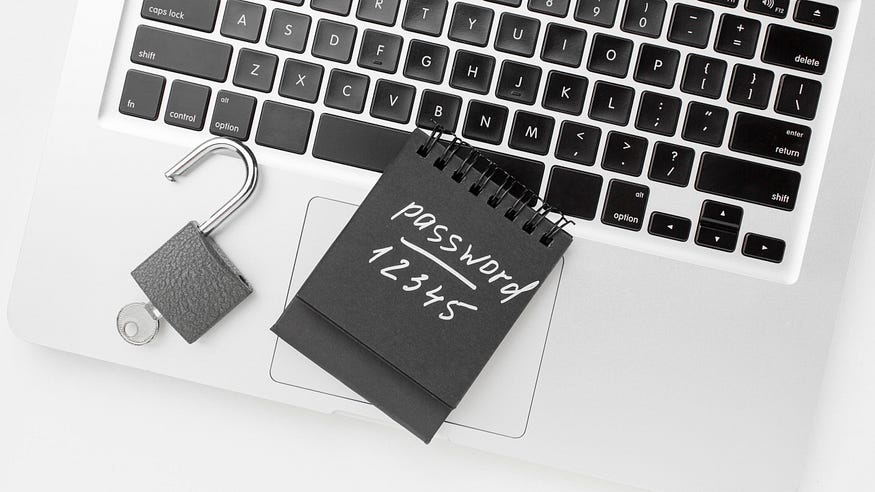
Weak passwords remain the leading cause of account breaches. People often choose short or predictable passwords because they’re easy to remember, but attackers can crack them in seconds using automated tools.
The problem becomes much worse when the same password is reused across multiple websites. If one service is breached, attackers try that email and password pair across other sites — a technique called credential stuffing — and it works more often than you’d expect.
We’ve all seen massive password leaks in the news. If your common password appeared in those data breaches and you reused it, attackers essentially obtained a duplicate key to your online presence. This isn’t the result of some advanced hack; it’s usually just people choosing convenience over security.
How to avoid it
- Use a password manager to generate and store them.
- Use unique, hard-to-guess passwords for every account. Aim for passwords that are 12+ characters and not based on real words or predictable patterns.
- Enable multi-factor authentication so even a stolen password isn’t enough.
2. Phishing Attacks
Phishing targets people rather than technology. Attackers try to trick you into entering your credentials on a fake login page or handing over your password or MFA code. These scams typically arrive as emails or messages that warn your account is compromised and urge you to “log in” immediately. The fake sites look convincing, and the sense of urgency makes people act without thinking.
Phishing works because it exploits trust and panic. A well-crafted phishing email can look nearly identical to a legitimate one from your bank or service provider.
How to avoid it
- Be skeptical of unexpected messages asking you to click a link or verify your account.
- Always check the URL carefully before entering your credentials.
- Never share passwords or MFA codes through email or chat.
- Use browser phishing protection (Chrome, Firefox, Edge).
- Prefer app-based or hardware-key MFA over SMS, which can be intercepted.
3. Outdated Authentication Practices (Lack of MFA, etc.)
Many authentication issues come from relying on outdated methods. Using only a password — without MFA — is one of the most significant risks today. Some systems still rely on outdated hashing algorithms, insecure login pages, or security questions that can be easily guessed or researched. Even SMS-based MFA has limitations, especially for important accounts, because phone numbers can be hijacked or intercepted.


 Ren Ecosystem