








Image: Adobe Stock
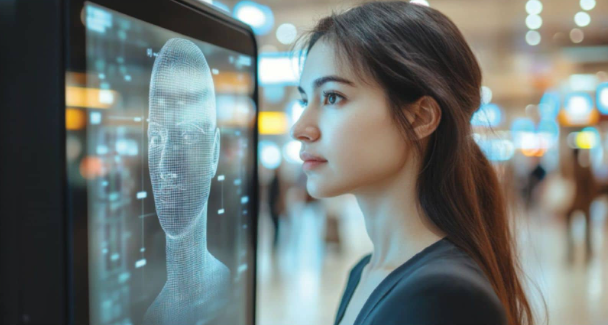
From iris scans to cardiac signatures, next-generation biometrics promise seamless journeys through airports.
The next time you fly you may be able to simply walk through the scanning gate and continue without stopping. There'll be no need to take out your passport or phone to pass through immigration and security. Nothing new? Well, now it won't be your face the system is scanning, but your heart-beat. Welcome to Biometrics 2.0.
What sets next-generation biometrics apart from today's systems is continuous verification rather than one-off checks. Currently, most airports rely on finger-prints or a single facial scan at a gate. The next wave, powered by Al, verifies identity seamlessly as you move through the airport.
Drawing on data securely stored in na-tional databases, these systems compare unique biological identifiers from facial fea-tures to cardiac rhythms to confirm you are who you claim to be. Your heartbeat, like your fingerprint, is uniquely yours. This touchless approach means no time wast-ed at physical checkpoints and a smoother journey from kerbside to cabin.
Biometrics 2.0 represents a shift from checkpoint-based security to background identity assurance. Instead of isolated inspection points, verification happens quietly and continuously. By reducing reli-ance on manual checks, AI-driven systems can lower the margin for human error in high-security settings such as immigration and security screenings.
Of course, no single system is foolproof. This is why next-generation biometric solu-tions are designed to work in tandem; for example, cardiac biometrics may be paired with voice recognition and iris scans com-bined with palm-vein authentication. It feels a little Mission: Impossible, does it not?
Naturally, the question of who owns the data will arise. Advances in decentralised identity frameworks and tokenised biomet-rictemplates aim to address these concerns. Rather than storing sensitive data in one central repository, decentralised systems distribute and encrypt information. Rath-er than storing images, biometric data is converted into secure digital tokens via 'to-kenisation', often transmitted as one-time encrypted credentials. The result is greater security, greater control and reduced risk.
Singapore's Changi Airport already uses iris and facial recognition at multiple checkpoints. Airports in Jakarta and Sura-baya have introduced biometric corridors that enable passengers to move through checkpoints using facial verification. Mean-while, the Smart Path platform by SITA, the world's leading specialist in air transport communications and information technol-ogy, is deployed in more than 40 airports worldwide, integrating biometrics across check-in, security, border control and boarding through a single facial enrolment.
Biometrics 2.0 is no longer theoretical. It is steadily reshaping the passenger jour-ney and turning identity itself into the ulti-mate travel document.


 Ren Ecosystem